Our sound is not an industrial zone — and our drinking water is not a gamble.
Massive offshore wind was fast-tracked over the objections of the people who actually live on this shore. You pay for it twice: once on your electric bill, and again in the industrialization of the waters — and the aquifer — that define Cape Cod. Energy policy should answer to residents, not to out-of-state developers and the politicians who court them.
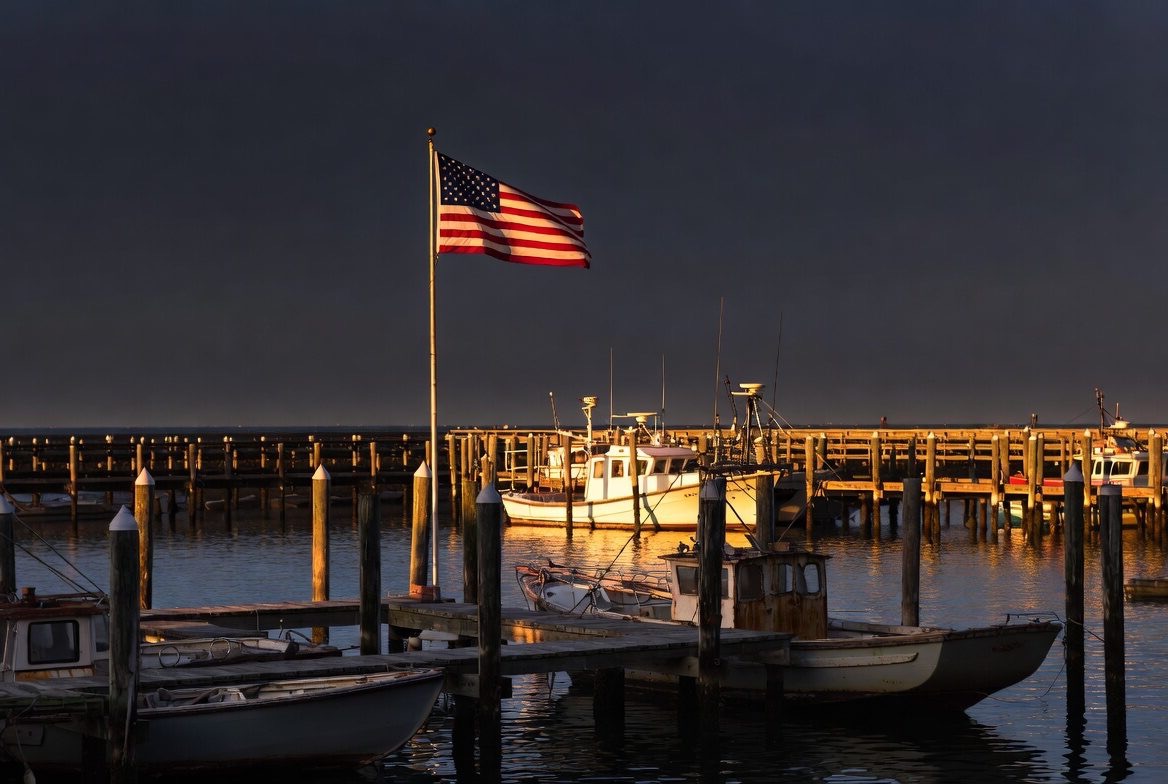
“My constituents across Cape Cod are already facing the real and growing consequences of high-voltage infrastructure proposed in densely populated neighborhoods, near sensitive water supplies, and through essential recreational areas.”
— State Rep. Steven Xiarhos, 5th Barnstable (2025)
They put it on top of our drinking water.
Cape Cod sits on a federally designated sole-source aquifer — it supplies essentially all of our drinking water. The onshore substations that tie offshore wind into the grid store thousands of gallons of insulating dielectric fluid, and the expansion of the Oak Street substation in West Barnstable would raise that stored volume from 39,000 to 70,000 gallons — sitting inside a wellhead-protection zone, upgradient of public wells. A second proposed station off Shootflying Hill Road would hold an estimated 125,000 gallons of dielectric fluid.
Town officials themselves have sounded the alarm. Charles McLaughlin, Senior Attorney for the Town of Barnstable, warned that a single gallon of this fluid could pollute five million gallons of water. Hans Keijser, who supervises the Hyannis water supply, warned that a release could reach the Mary Dunn wellfield in as little as seven days — and then move on to Yarmouth’s supply. Once this aquifer is contaminated, there is no second aquifer. There is no backup Cape Cod.
The blades are falling apart.
On July 13, 2024, a 351-foot blade on a Vineyard Wind turbine shattered into the Atlantic southwest of Nantucket, closing every south-shore beach at the height of the summer season and coating the sand in sharp fiberglass shards and foam. It was not one bad blade. GE Vernova’s own analysis found 68 of the 72 installed blades were defective.
It gets worse. When Vineyard Wind sued GE in April 2026, its own complaint alleged that factory workers in Gaspé, Quebec had been instructed by their supervisors to falsify the quality-assurance data — and that GE later fired more than 40 of them. GE paid the Town of Nantucket $10.5 million to settle. This is the “clean, safe” industry Beacon Hill forced on us — built by people told to fake the safety paperwork.
The people who live here never consented.
Groups across the Cape are standing up. Save Greater Dowses Beach, co-founded by Susanne Conley, put it best: beaches are for burying your toes, not high-voltage cables. Barnstable Speaks is fighting to stop the industrialization of Barnstable and to protect the aquifer. Protect Our Cape Cod Aquifer (POCCA) is guarding the water we all drink. Yet a host-community agreement was pushed through on a bare 7–5 Town Council vote — a razor margin for a project that reshapes our coast for a generation.
Where we stand
- Protect the aquifer first. No industrial fluid storage gambling with the only drinking water Cape Cod has.
- Residents decide. No megaproject off our coast — or over our water — without the consent of the people who live here.
- Show the true cost. Ratepayers deserve honest numbers on what this does to their bills.
- Protect the fishery and the environment — the waters, the wildlife, and the working families who depend on them.
Sources: Cape Cod Commission & EPA sole-source aquifer designation; Barnstable Speaks (dielectric-fluid storage figures, McLaughlin & Keijser warnings); Utility Dive & Nantucket Current (July 13 2024 blade failure, 68-of-72 defective, Vineyard Wind v. GE April 2026 complaint, $10.5M settlement); Commonwealth Beacon (June 27 2024 host-agreement vote). Fluid-storage volumes and the seven-day travel-time estimate are attributed to named town officials.